

We compiled these trends from over 100 brands, comparing year-over-year data for the date range June 1, 2026, to June 30, 2026.
June 2026: Retail Momentum Holds as Inflation Pressures Ease
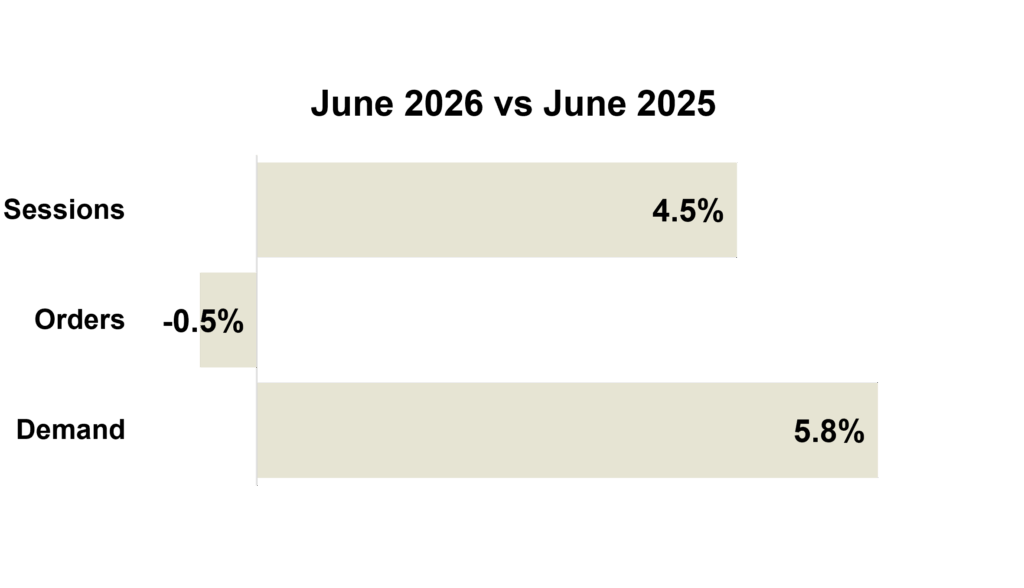
June proved that consumers are still spending. Sessions rose about 4.5% and demand grew 5.8%, even as orders slipped 0.5%.
Consumers remain value-conscious and economically wary, but lower energy costs and moderating inflation are helping support continued spending momentum.
Inflation eased considerably during the month, helping improve household purchasing power. The Consumer Price Index fell 0.4% from May, the largest monthly decline since 2020.
Amid strong spending activity and easing inflation, many businesses are cautiously optimistic. Census Bureau data showed positive readings for current performance and future demand, although retailers continue to face higher costs.
Together, June’s data points to a consumer economy that remains resilient, supported by moderating inflation and steady spending.
June 2026 Marketing Trends
Trend #1:
Prime Day 2026: Strong Spending, Smarter Shopping
Prime Day 2026 showed that consumers are still spending, but they’re spending smarter. The four-day event generated roughly $26.4 billion in U.S. online sales, up more than 9% year over year and one of the strongest ecommerce performances on record.
Consumers gravitated toward value. Everyday categories like beauty, grocery, personal care, and pet supplies outperformed, while larger discretionary purchases were less of a priority. Average order values declined, signaling a more intentional and budget-conscious shopper.
Prime Day also continued its transformation into a broader retail event. More than half of shoppers compared prices across retailers, and promotions from Walmart, Target, and Best Buy captured significant traffic alongside Amazon. The event increasingly resembles a summer version of Black Friday.
Another standout trend was the growth of AI-powered shopping. Shoppers using AI tools for product discovery converted at higher rates than those using traditional channels, highlighting the growing influence of AI on the path to purchase. Mobile commerce also reached record levels, accounting for more than half of online sales.
Prime Day 2026 reinforced three clear trends: consumers are value-driven, shopping is increasingly cross-retailer, and AI is rapidly becoming a meaningful driver of discovery and conversion.
Trend #2:
Sports Marketing Expands Beyond the Game
Sports marketing is no longer confined to stadium signage, broadcast commercials, or game-day sponsorships. As fan engagement increasingly shifts to digital channels, brands are finding new opportunities to connect with audiences through social media, streaming content, athlete partnerships, and always-on storytelling. According to ANA, evolving consumption habits—particularly among younger and female audiences—are reshaping the way fans interact with teams, athletes, and sports culture.
Rather than relying on seasonal campaigns tied to major sporting events, marketers are investing in longer-term engagement strategies that extend well beyond the final whistle. Athlete-led content, behind-the-scenes docuseries, creator collaborations, and multi-year endorsement relationships are helping brands remain part of the conversation year-round. This approach creates more frequent touchpoints with consumers while building deeper emotional connections that transcend the sport itself.
The shift reflects a broader transformation in media consumption. Fans increasingly follow athletes across platforms, consuming highlights, interviews, lifestyle content, and behind-the-scenes storytelling in addition to live games. For brands, sports marketing is evolving from a sponsorship strategy into a content and community-building strategy. The value is no longer tied solely to audience reach during an event, but to sustained engagement across an interconnected ecosystem of channels and personalities.
For marketers, that ecosystem extends beyond digital. As brands look to create deeper loyalty among fans, direct mail offers a unique opportunity to bring the excitement of sports into the physical world. Personalized season previews, VIP event invitations, commemorative collectibles, game-day guides, exclusive merchandise offers, and premium fan packages can help transform passive audiences into active brand advocates. In an increasingly digital environment, tangible experiences can stand out and create a lasting emotional connection.
For CMOs, the opportunity lies in treating sports partnerships as long-term brand assets rather than short-term media buys. Success increasingly depends on developing integrated engagement programs that combine digital content, athlete storytelling, live experiences, and physical touchpoints. Brands that connect with fans across multiple channels—including the mailbox—can strengthen loyalty, increase participation, and stay relevant long after the game is over
Why it matters for CMOs
- Move beyond event-based sponsorships and invest in year-round engagement strategies.
- Leverage athlete partnerships as content engines, not just endorsement vehicles.
- Create platform-specific experiences that connect with younger and more diverse fan audiences.
- Focus on community building and storytelling to maximize the long-term value of sports investments.
Read more: https://www.ana.net/magazines/show/id/ana-2026-07-sports-marketing-beyond-the-field
Trend #3:
Print Sustainability Metrics That Buyers Actually Care About (SGP)
Sustainability metrics have shifted from a “nice to have” differentiator to a core input in procurement decisions. For many buyers, especially those operating under Environmental, Social, and Governance (ESG) requirements, sustainability data now plays a direct role in supplier qualification, risk assessment, and reporting accuracy.
This shift is being driven by multiple forces. Regulatory frameworks such as the EU’s Corporate Sustainability Reporting Directive and California’s climate disclosure laws are expanding the scope of required environmental reporting across global supply chains. At the same time, voluntary frameworks like the Greenhouse Gas Protocol and ISO 14001 have become de facto benchmarks for how environmental performance should be measured and documented. Even when a buyer is not legally required to report, their customers, investors, or partners often are.
As a result, buyers are no longer asking whether a print supplier has sustainability initiatives in place. They are asking whether the supplier can produce reliable, verifiable data that aligns with established reporting frameworks and can withstand internal or third-party review.
Trend #4:
USPS Promotions & Incentives Guide: H2 2026 Strategy
The USPS Business Promotions and Incentives program for the second half of 2026 features three core 5% baseline direct mail discounts and two stackable 1% bonus credits. Eligible marketing campaigns using First-Class Mail or Marketing Mail can combine these incentives to achieve a maximum of 7% in total postage savings.
Active Core 5% Baseline Promotions
- Continuous Contact (Active through December 31): Rewards repeat, thematic follow-up mailings sent to the same audience with at least a 90% list overlap.
- First-Class Mail Advertising (September 1 – December 31): Applies to personalized marketing messages, retail promotional offers, or performance-driven inserts embedded inside First-Class Mail pieces.
- Integrated Technology (Custom 6-month window): Requires mail pieces to seamlessly merge print with digital elements like QR codes, AI features, Augmented Reality, or interactive voice assistant call-to-actions.
Year-Round 1% Stackable Incentives
- Informed Delivery Add-On: Provides an extra 1% discount for integrating interactive digital previews into the USPS Informed Delivery consumer platform.
- Sustainability Add-On: Earns an additional 1% discount by officially verifying that your paper stock comes from certified eco-friendly sources.
To maximize these savings, businesses must navigate strict registration deadlines and submission criteria through the USPS Business Customer Gateway. Planning mailer formats, targeting criteria, and print specifications in advance ensures compliance with all program mandates.
Jump to Section
Marketing KPIs: June 2026 Trends by Industry
Marketing KPIs: June 2026 Trends by Company Revenue
$100M+ | $15M-$100M | $0-$15M
Marketing KPIs: June 2026 Trends by Industry
Apparel Industry
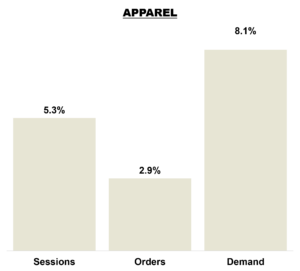 Sessions increased 5.3% year over year, reflecting continued consumer engagement in the Apparel category. Orders rose 2.9%, indicating steady demand despite slightly softer conversion efficiency compared to traffic growth. Revenue increased 8.1%, outpacing both sessions and orders, suggesting stronger average order values and a favorable product mix. Overall, June delivered healthy growth and improved monetization, positioning the category well heading into the second half of the year.
Home Brands
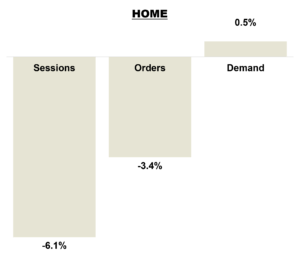
Sessions declined 6.1% year over year, reflecting softer traffic in the Home category. Orders decreased 3.4%, outperforming traffic and indicating improved conversion efficiency among shoppers who visited the site. Revenue grew 0.5% despite lower order volume, suggesting stronger average order values and a favorable product mix. Overall, June results demonstrate improved monetization and resilient consumer spending, even as overall demand remained below last year’s levels.
Outdoor Brands
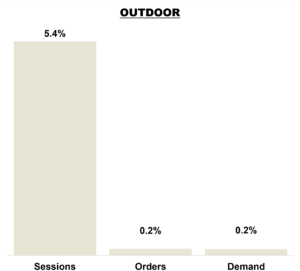
Sessions increased 5.4% year over year, reflecting continued consumer engagement in the Outdoor category. Orders and revenue were essentially flat, rising just 0.2% each, indicating that increased traffic did not translate into proportional sales growth. Stable revenue relative to orders suggests average order values remained consistent, while softer conversion efficiency limited overall performance. Overall, June highlights steady shopper interest but underscores the need to improve conversion to better capitalize on growing traffic.
Specialty Retailers
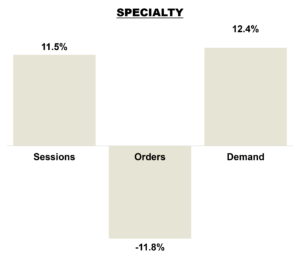
Sessions increased 11.5% year over year, reflecting strong consumer interest in the Specialty category. Orders declined 11.8%, indicating weaker conversion efficiency as increased traffic did not translate into purchase volume. Despite the decline in orders, revenue grew 12.4%, significantly outperforming both traffic and orders and suggesting substantial gains in average order value and product mix. Overall, June highlights strong revenue productivity among converting shoppers, though improving conversion remains a key opportunity to fully capitalize on elevated engagement.
Marketing KPIs: June 2026 Trends by Company Revenue
Tier 1 Brands
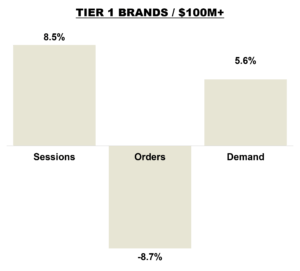
Sessions increased 8.5% year over year for Tier 1 brands, reflecting continued consumer engagement and brand strength. Orders declined 8.7%, indicating softer conversion efficiency despite higher traffic levels. Revenue grew 5.6%, however, significantly outperforming order volume and suggesting stronger average order values and a more favorable product mix. Overall, June results highlight resilient spending among converting shoppers, though improving conversion remains a key opportunity to fully capitalize on increased traffic.
Tier 2 Brands
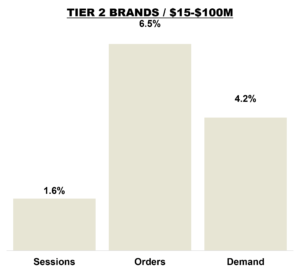
Sessions increased 1.6% year over year for Tier 2 brands, while orders grew 6.5%, indicating improved conversion efficiency and strong purchase intent among site visitors. Revenue increased 4.2%, remaining positive despite trailing order growth, which suggests some pressure on average order values. Overall, June results reflect healthy demand and stronger conversion performance, with continued opportunities to strengthen basket size and maximize revenue growth.
Tier 3 Brands
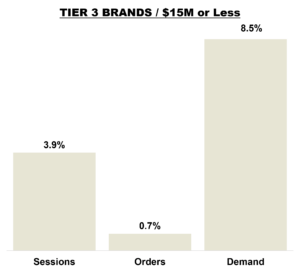
Sessions increased 3.9% year over year for Tier 3 brands, while orders rose 0.7%, reflecting modest growth and relatively stable conversion performance. Revenue grew 8.5%, significantly outpacing both traffic and orders, indicating stronger average order values and a favorable product mix. Overall, June results demonstrate improved monetization and healthier spending among converting shoppers, providing a positive sign for smaller brands as they head into the second half of the year.